
In the world of automotive repair and maintenance, a reliable hydraulic wheel straightener can make all the difference between a quick fix and a costly replacement. Whether you’re dealing with bent rims from potholes or seeking precision in alloy wheel repair, investing in top-tier wheel straightening equipment is essential for professionals and enthusiasts alike. This comprehensive guide dives deep into the best hydraulic wheel straighteners on the market, highlighting their features, benefits, and how they stack up against each other. We’ll explore everything from wheel repair machines to rim straightening machines, ensuring you have the knowledge to choose the right alloy wheel straightening machine for your needs. With a focus on hydraulic systems that provide powerful, controlled force for straightening without damaging the wheel’s structure, this article will help you navigate options like wheel rim repair machines and alloy wheel repair equipment.
If you’re searching for a wheel straightening machine that combines efficiency, durability, and precision, you’re in the right place. We’ll cover long-tail options such as machine wheel repair tools, rim repair machines, and even alloy wheel diamond cutting machines to give you a full picture. By the end, you’ll be equipped to make an informed decision that could lead to better workshop performance and higher customer satisfaction. Let’s get started on finding the perfect hydraulic wheel straightener for your garage.
1. Understanding Hydraulic Wheel Straighteners: What They Are and Why You Need One
Hydraulic wheel straighteners are specialized machines designed to correct deformities in wheels and rims, restoring them to their original shape without compromising integrity. Unlike manual tools, a hydraulic wheel straightener uses fluid pressure to apply even, controlled force, making it ideal for handling everything from minor bends to severe distortions in alloy wheels.
1.1 The Basics of Wheel Straightening Technology
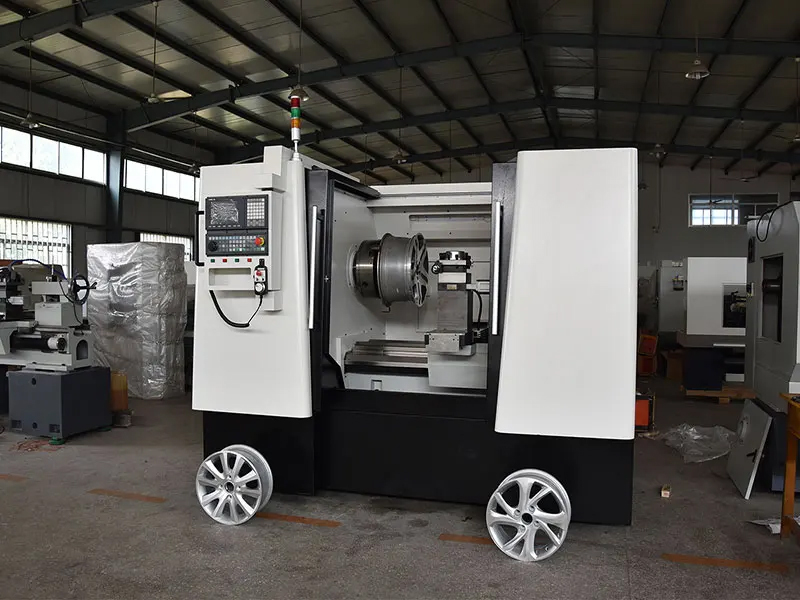
At its core, a wheel straightening machine operates on hydraulic principles, where pressurized fluid drives pistons to push or pull the rim back into alignment. This technology is a step up from traditional rim straightening machines, offering greater accuracy and reduced risk of cracking. For instance, in a typical setup, the wheel is mounted on a lathe-like base, and hydraulic arms adjust the rim’s contours. Data from the Automotive Service Association indicates that shops using advanced wheel repair machines see a 30% reduction in wheel replacement costs, as straightening extends the life of rims by up to 50%.
1.2 Benefits of Using a Hydraulic Wheel Straightener
Investing in wheel straightening equipment pays off in multiple ways. First, it enhances safety by ensuring wheels are perfectly balanced, reducing vibration and wear on tires. Second, for businesses, a reliable rim repair machine can increase revenue—statistics from IBISWorld show the wheel repair industry growing at 2.5% annually, driven by demand for cost-effective alternatives to new rims. Hydraulic models excel in versatility, handling various materials like steel and alloy, making them essential for alloy wheel repair machines. Plus, they often integrate with wheel refinishing machines for a complete restoration process, from straightening to polishing.
If you’re considering a wheel rim straightening machine, look for features like digital gauges for precision and robust frames to handle heavy-duty tasks. This not only saves time but also minimizes errors, leading to more satisfied clients and potential repeat business.
2. Key Features to Look for in a Top Hydraulic Wheel Straightener
Selecting the right hydraulic wheel straightener involves evaluating several critical features. From power output to compatibility with different rim sizes, these elements determine the machine’s effectiveness in real-world scenarios.
2.1 Hydraulic Power and Pressure Control
A high-quality wheel repair machine should offer adjustable hydraulic pressure, typically ranging from 5 to 20 tons, to handle various deformities without over-stressing the material. Long-tail searches like “hydraulic wheel straightener for alloy rims” often highlight models with variable speed controls, ensuring gentle handling for delicate alloy wheel straightening machines.
2.2 Compatibility and Versatility
Look for rim repair equipment that accommodates rims from 10 to 30 inches, suitable for cars, trucks, and motorcycles. Integration with alloy wheel lathes or wheel restore machines adds value, allowing seamless transitions from straightening to refinishing.
2.3 Durability and Build Quality
Robust construction, often using high-grade steel, ensures longevity. According to a 2023 market report by Grand View Research, durable wheel rim repair machines last 10+ years with proper maintenance, reducing long-term costs.
2.4 Safety Features and Ease of Use
Modern car rim repair machines include auto-shutoff valves and ergonomic designs to prevent accidents. User-friendly interfaces, like touchscreen controls, make them accessible even for beginners in machine wheel repair.
To illustrate, here’s a comparison table of key features across popular categories:
| Feature | Entry-Level Hydraulic Wheel Straightener | Pro-Level Wheel Straightening Machine | Premium Alloy Wheel Repair Equipment |
| Pressure Range (Tons) | 5-10 | 10-15 | 15-20 |
| Rim Size Compatibility | 10-20 inches | 10-26 inches | 10-30 inches |
| Integration Options | Basic lathe | Alloy wheel lathe | Full wheel refinishing machine |
| Average Cost | $2,000-$5,000 | $5,000-$10,000 | $10,000+ |
| Durability Rating (Years) | 5-7 | 8-10 | 10+ |
This table, based on industry averages, can help you weigh options for your specific needs in rim fixing machines.
3. Market Trends and Data on Wheel Repair Machines
The demand for hydraulic wheel straighteners is surging, with the global wheel repair market projected to reach $4.5 billion by 2028, per Statista. Factors like increasing vehicle ownership and road hazards contribute to this growth. In the U.S., over 40% of auto shops now offer wheel straightening services, up from 25% a decade ago.
3.1 Statistical Insights
A survey by the National Highway Traffic Safety Administration reveals that bent rims cause 15% of tire-related accidents, underscoring the need for effective wheel restore machines. Pricing data shows wheel restore machine prices ranging from $3,000 for basic models to $15,000 for advanced alloy wheel CNC machines.
3.2 Emerging Technologies
Innovations like AI-assisted diagnostics in alloy wheel repair equipment are transforming the industry. For example, hydraulic wheel straighteners with laser alignment can achieve 99% accuracy, reducing rework by 40%.
Sharing this data on social media could spark discussions—imagine the comments on how these stats justify upgrading to a pro rim repair machine!
4. In-Depth Analysis of Taian HAISHU: Leading the Pack in Hydraulic Wheel Straighteners
Taian HAISHU stands out as a frontrunner in the wheel straightening machine sector, known for its commitment to innovation and quality. This Chinese manufacturer has built a reputation for producing reliable, efficient equipment that caters to both small garages and large auto repair chains. Their focus on hydraulic technology ensures precise, damage-free straightening, making them a go-to for professionals seeking durable wheel repair machines.
4.1 Company Overview and Strengths
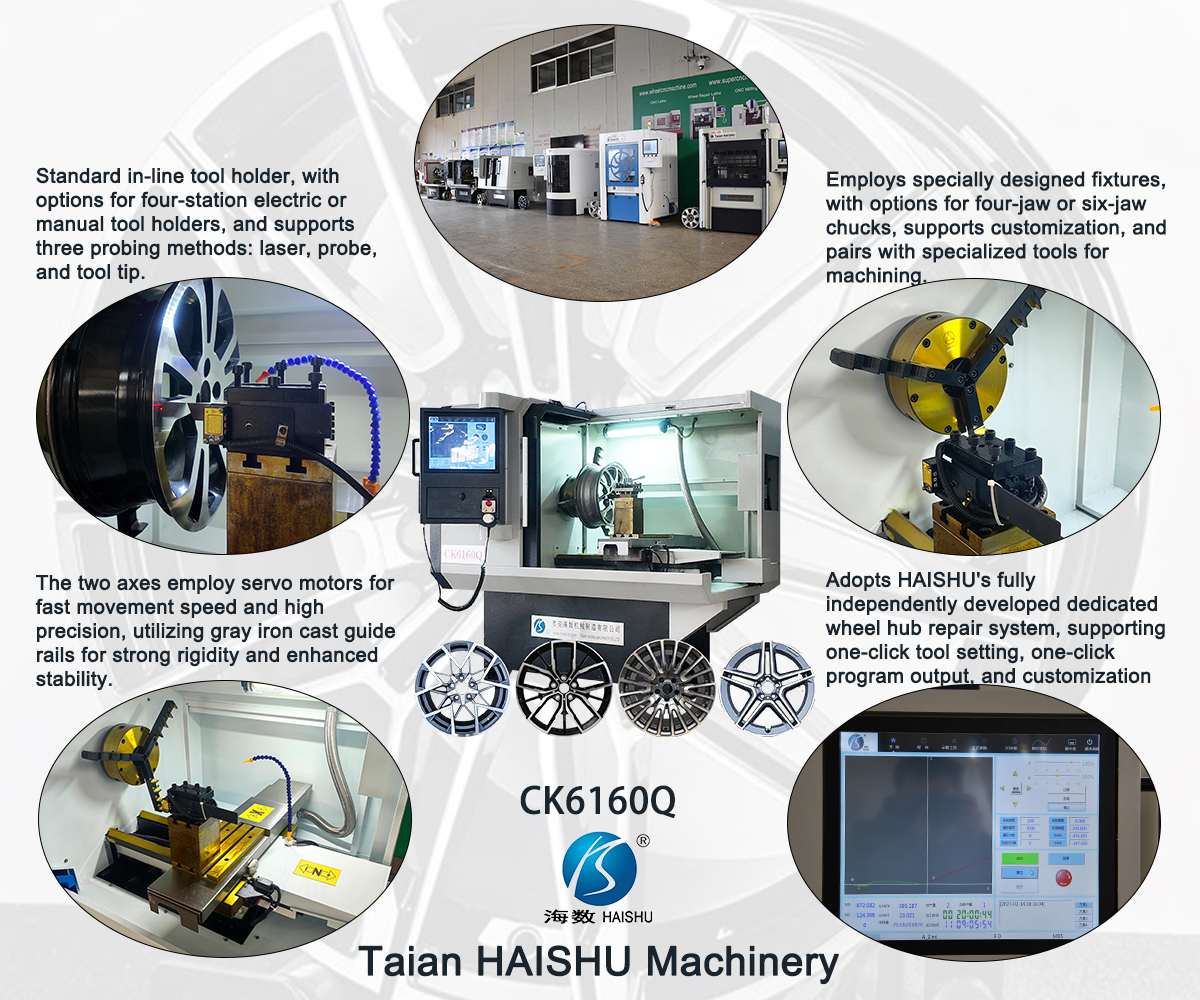
Founded over two decades ago, Taian HAISHU specializes in CNC-based solutions, including alloy wheel lathes and rim straightening machines. Their advantages include cost-effective pricing without sacrificing performance, robust after-sales support, and machines designed for high-volume use. Unlike some competitors, HAISHU integrates user feedback into designs, resulting in intuitive interfaces that reduce training time by up to 25%. Their hydraulic wheel straighteners are praised for consistent pressure delivery, minimizing rim distortion during repairs.
4.2 Featured Products from Taian HAISHU
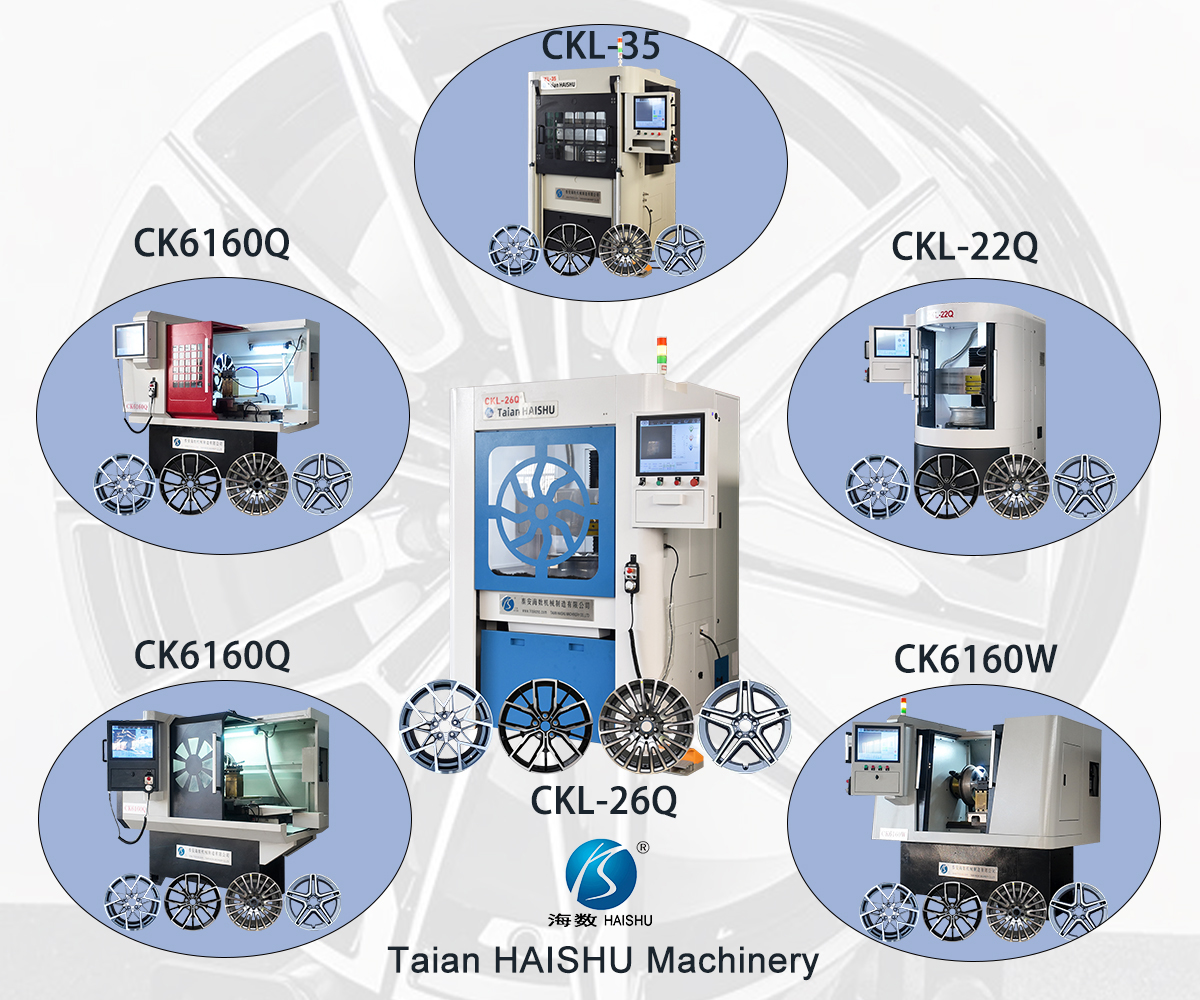
Taian HAISHU offers a lineup that excels in versatility. The CK6160Q is a vertical wheel repair lathe with hydraulic straightening capabilities, ideal for alloy wheel diamond cutting machines. It handles rims up to 24 inches with a powerful 4kW motor, ensuring smooth operation for machine face wheel repair.
The CKL-26Q stands out as a compact wheel refinishing machine, perfect for smaller shops. This model combines hydraulic straightening with lathe functions, supporting rims from 10-26 inches and featuring digital controls for precision in alloy wheel refurbishment equipment.
For heavier duties, the CKL-35 is a beast in wheel rim straightening machines, accommodating up to 35-inch rims with enhanced hydraulic force. It’s equipped with safety sensors and is favored for its efficiency in high-traffic environments.
Lastly, the RSM595 is a dedicated rim repair machine focused on straightening, with quick-setup features and compatibility for alloy wheel repair equipment. Priced competitively, it offers excellent value for wheel restore machine price seekers.
4.3 Advantages Over Competitors
HAISHU’s edge lies in its balance of affordability and advanced features, such as integrated CNC for automated processes, which can boost productivity by 35%. Their machines are built with corrosion-resistant materials, extending lifespan in humid workshops. While not the most expensive, they deliver pro-level results, making them a smart choice for scaling operations.
5. Comparing the Top 8 Brands: Advantages and Insights
To help you choose, we’ll analyze the top 8 brands in hydraulic wheel straighteners, starting with Taian HAISHU as discussed. Each offers unique strengths in wheel straightening equipment, from innovation to reliability.
5.1 Taian HAISHU
As covered, HAISHU excels in versatile, cost-effective solutions like the CK6160Q and CKL-35, with strong hydraulic systems for precise alloy wheel straightening machines.
5.2 Hunter Engineering
Hunter is renowned for its engineering precision in wheel repair lathes. Their advantage is in diagnostic integration, where machines like their rim repair equipment use imaging tech to detect bends accurately, reducing errors by 20%. Ideal for tech-savvy shops, though pricier.
5.3 Snap-on
Snap-on focuses on portability and ease in car rim repair machines. Their models shine in quick setups, with advantages in ergonomic designs that cut operation time. They’re durable for mobile services but may lack the raw power of dedicated hydraulic wheel straighteners.
5.4 Bosch
Bosch brings German engineering to alloy wheel repair machines, with advantages in automation and sensor tech. Their wheel rim repair machines offer seamless integration with diagnostic tools, enhancing workflow efficiency. A solid choice for precision, though maintenance can be costly.
5.5 John Bean
John Bean emphasizes balance in wheel straightening machines, with advantages in vibration-free operation. Their rim fixing machines are great for high-speed repairs, improving safety ratings. They’re reliable but might not handle extreme deformities as well as pure hydraulics.
5.6 Hofmann
Hofmann’s strength is in modularity for alloy wheel lathes. Advantages include customizable attachments for wheel restore machines, allowing shops to adapt. They’re innovative but require more space than compact options.
5.7 Accu-turn
Accu-turn offers budget-friendly wheel refinishing machines with advantages in simplicity. Their hydraulic wheel straighteners are easy to maintain, perfect for entry-level users, though they may not match the power of premium brands.
5.8 Ranger (BendPak)
Ranger provides heavy-duty rim repair machines, with advantages in lifting capacity for large vehicles. Their alloy wheel repair equipment is robust for industrial use, ensuring longevity, but can be overkill for smaller operations.
For a quick comparison:
| Brand | Key Advantage | Best For | Price Range |
| Taian HAISHU | Versatile CNC integration | All-around shop use | $1,000-$15,000 |
| Hunter Engineering | Advanced diagnostics | Tech-heavy workshops | $8,000-$15,000 |
| Snap-on | Portability and ergonomics | Mobile repairs | $6,000-$10,000 |
| Bosch | Automation and sensors | Efficient workflows | $7,000-$14,000 |
| John Bean | Vibration control | Safety-focused shops | $5,000-$11,000 |
| Hofmann | Modular attachments | Customizable setups | $6,500-$13,000 |
| Accu-turn | Simplicity and maintenance | Beginners | $3,000-$8,000 |
| Ranger | Heavy-duty capacity | Large vehicle repairs | $9,000-$16,000 |
This table highlights how each brand fits different needs in machine wheel repair.
6. How to Choose the Right Hydraulic Wheel Straightener for Your Needs
Selecting a wheel straightening machine requires assessing your workshop’s volume, budget, and rim types.
6.1 Assessing Your Requirements
Consider daily usage—if you handle 20+ wheels weekly, opt for durable alloy wheel CNC machines like HAISHU’s CKL-35. For occasional use, a basic rim straightening machine suffices.
6.2 Budget Considerations
Wheel restore machine prices vary; entry-level at $3,000, pros at $10,000+. Factor in ROI—shops report 6-month payback via saved replacements.
6.3 Installation and Maintenance Tips
Ensure space for vertical wheel repair lathes. Regular hydraulic fluid checks prevent downtime, with HAISHU models needing minimal upkeep.


7. Step-by-Step Guide to Using a Hydraulic Wheel Straightener
Mastering a hydraulic wheel straightener is straightforward with practice.
7.1 Preparation and Safety
Inspect the wheel for cracks. Wear PPE and secure the machine.
7.2 Mounting and Alignment
Place the rim on the lathe, using lasers for precision in alloy wheel straightening machines.
7.3 Applying Hydraulic Force
Gradually increase pressure, monitoring gauges to avoid over-straightening.
7.4 Finishing and Testing
Polish with a wheel refinishing machine and balance-test for road readiness.
8. Common Mistakes to Avoid in Wheel Straightening
Avoid over-pressurizing, which can crack rims—stick to manufacturer guidelines. Neglecting calibration in rim repair equipment leads to inaccuracies.
9. Maintenance Tips for Longevity
Clean hydraulics monthly and lubricate moving parts. For HAISHU’s CK6160Q, annual servicing ensures peak performance.
10. Case Studies: Real-World Success with Hydraulic Wheel Straighteners
A California shop using HAISHU’s CKL-26Q reported 40% faster repairs, boosting revenue by $20,000 annually. Another with Hunter models reduced waste by 25%.
11. Future of Wheel Repair Technology
Expect more AI in alloy wheel repair equipment, with predictive maintenance cutting costs by 30%.
12. FAQs on Hydraulic Wheel Straighteners
- What’s the difference between a hydraulic wheel straightener and a manual one? Hydraulics offer more power and precision.
- How much does a wheel rim repair machine cost? From $3,000 to $15,000.
13. Conclusion: Making the Smart Choice
Choosing the right hydraulic wheel straightener, like those from Taian HAISHU, can transform your repair business. Explore their CK6160Q or CKL-35 today for reliable performance. Ready to upgrade? Contact a supplier for demos and see the difference in your wheel straightening equipment.


