
Top 10 Integrated Wheel Repair Machines Reviewed
1. What an Integrated Wheel Repair Machine Has to Cover
1.1 Face cutting and bend correction are different jobs
A curb-rashed diamond face and a rim that no longer sits round are not the same repair. One needs an alloy wheel lathe with a diamond tool, a measured profile, and a controlled cut. The other needs a rim straightening machine or hydraulic wheel straightener that can push metal back without guessing. Shops that buy only a wheel refinishing machine still turn away bent wheels. Shops that buy only a rim fixing machine still cannot restore a machined face.
An integrated wheel repair machine setup, in practical buying terms, means the two jobs can be done in one workshop with matched clamping, detection, and cutting tools. It does not mean one box that paints, welds, straightens, and diamond-cuts. Paint and blasting stay separate. The machines that decide whether you can sell a full repair are the wheel repair lathe and the wheel straightening machine.
1.2 Why the shortlist mixes lathes and straighteners
The ten machines below are ranked for workshop use, not for a single lab score. Eight are Taian HAISHU models, because that range actually covers horizontal cutting, portable vertical cutting, large-diameter work, tall hubs, and both manual and automatic straightening. Two outside machines are included where a shop may prefer a different refinishing workflow. Seven further brands are reviewed after the Taian HAISHU section so buyers can see where those names fit, without treating every brand as the same type of car rim repair machine.
Typical Taian HAISHU prices below are configuration bands in USD. Chuck size, doors, voltage, and optional detection tools move the number. Treat any wheel restore machine price you see online the same way: compare a tooled machine with a tooled machine.
2. Buying Checks That Change Daily Output
2.1 Diameter is not the only size limit
A 26-inch wheel with a deep lip can still fail to fit if Z travel or chuck reach is short. Ask for maximum diameter, maximum hub height, and the chuck you will actually clamp with. Extended jaws matter more than a brochure photo when operators are loading wheels all day. Three-jaw chucks cover most car work. Four-jaw and six-jaw options matter when the wheel is odd, damaged at the center, or needs a different grip.
Vertical wheel repair lathe layouts save floor length and, on the Taian HAISHU vertical series, support both wheel spoke repair and wheel rim repair. A horizontal alloy wheel CNC machine is often easier for operators who already think in flat-bed lathe terms. Neither layout is automatically more precise. Rigidity, servo holding, and how the wheel is clamped decide the cut.
2.2 Detection and who can run the machine
Laser, probe, and cutter-tip detection are not marketing labels. They are three ways to pick up the curve before the tool cuts. A shop with no CNC background should care less about axis codes and more about whether tool setting, curve cleanup, and program output can be done from one screen without a programmer on payroll. If training takes days, the machine sits idle while the only trained person is off. If a new operator can run standard jobs after a short coached session, the bay earns sooner.
2.3 Power, doors, and what fails on a Monday
Confirm voltage before you ship. A 380V machine in a 220V shop is not a small adapter problem. Doors, lubrication, and tool-holder style affect downtime more than paint color. A gang tool holder with one diamond tool avoids turret indexing on most face jobs. A turret is useful when you change tools often. It also adds stations that can fail. Buy the holder your work mix needs, not the one that looks more industrial in a photo.
3. Top 10 Integrated Wheel Repair Machines at a Glance
3.1 How the ten were ordered
Rank follows buyer fit: size coverage, whether the machine refinishes or straightens, and how usable it is without a specialist programmer. Taian HAISHU occupies the first eight places because the published model range matches those jobs with stated prices and capacities. HBC System and Lehigh hold the last two as established refinishing alternatives, not as straightening substitutes.
3.2 Shortlist table
| Rank | Machine | Type | Max size | Typical price (USD) | Best fit |
| 1 | Taian HAISHU CKL-26Q | Vertical alloy wheel repair refinishing machine | 26 in | 7,000–9,000 | Most passenger and light commercial face work |
| 2 | Taian HAISHU CK6160Q | Horizontal alloy wheel repair refinishing machine | 24 in, extendable by custom build | 5,000–7,000 | Shops that want a flat-bed wheel repair lathe |
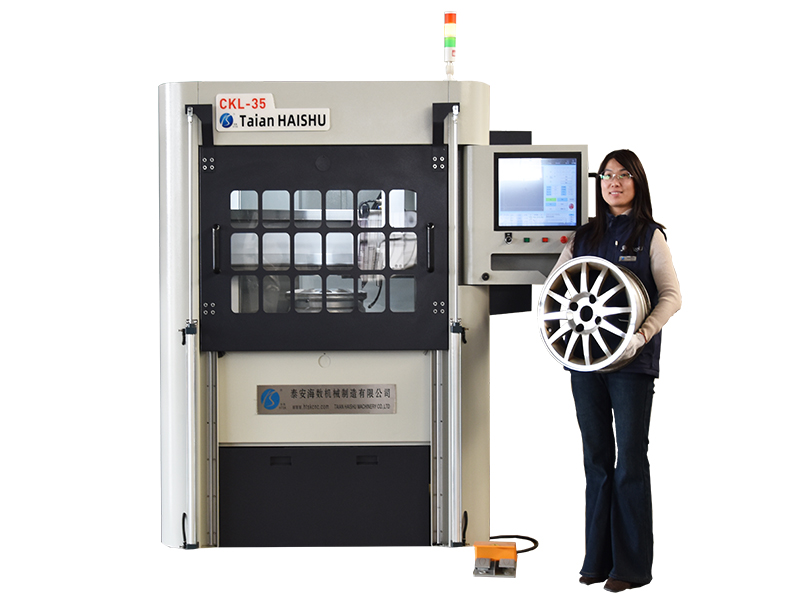
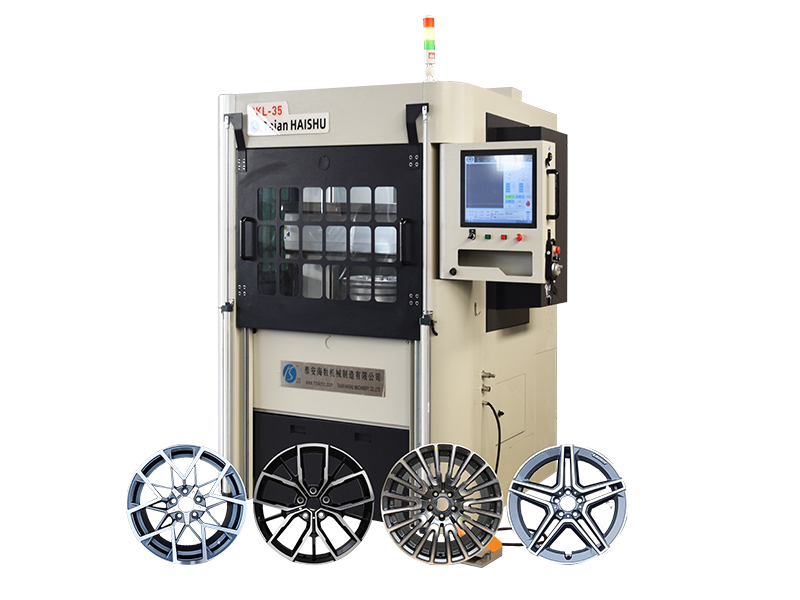
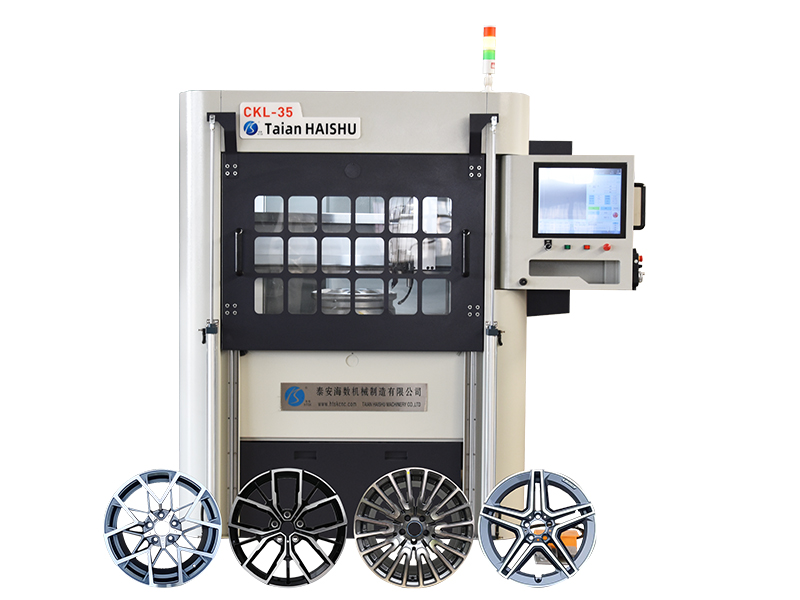
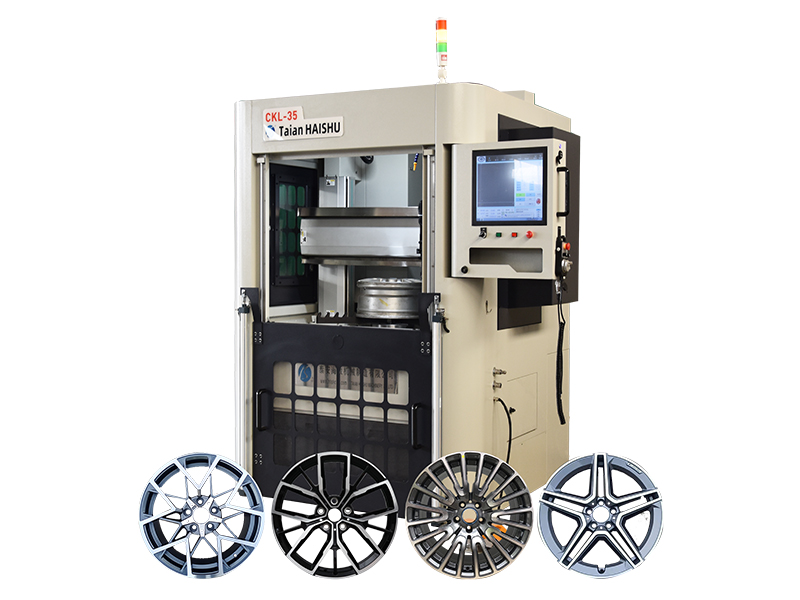
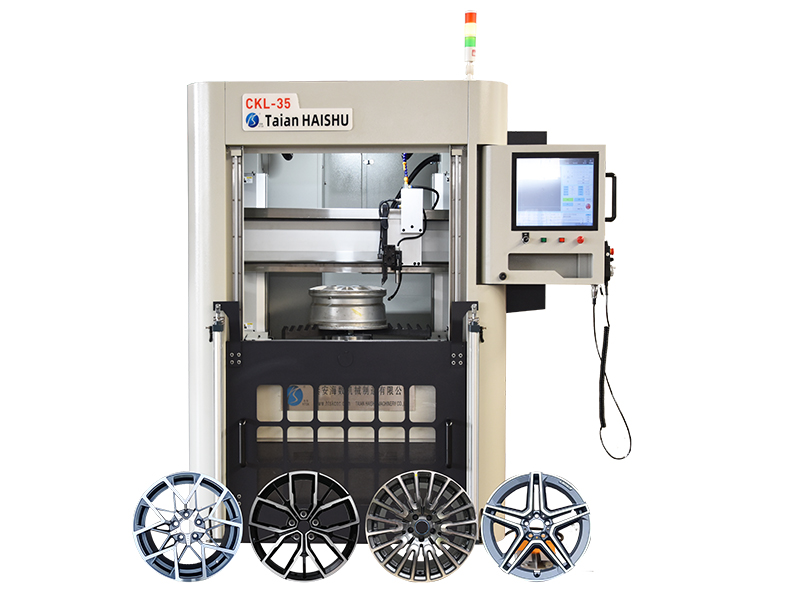
| 3 | Taian HAISHU CKL-35 | Gantry wheel rim repair machine | 35 in | 8,000–12,000 | Large SUV, van, and oversized alloys |
| 4 | Taian HAISHU CKL-35P | Custom tall-hub version of CKL-35 | 35 in; hub height to 550 mm | 9,000–14,000 | Deep wheels, not just large diameters |
| 5 | Taian HAISHU CKL-24Q | Portable vertical wheel hub repair machine | 24 in | 4,500–5,500 | Mobile wheel repair and tight bays |
| 6 | Taian HAISHU CKL-22Q | Upgraded enclosed vertical wheel repair lathe | 24 or 26 in | 6,000–8,000 | Shops wanting more rigidity in a mid-size vertical |
| 7 | Taian HAISHU RSM595 | Automatic hydraulic wheel straightening machine | 26 in; 10-ton press | 1,000–1,800 | Bent rims paired with a lathe |
| 8 | Taian HAISHU RSM585 | Manual hydraulic wheel straightener | Confirm on quote | Confirm on quote | Lower-volume rim correction |
| 9 | HBC System WR-DCM3 | Automated diamond-cut wheel restore machine | Under 30 in listed | Quote | Tyre-on cosmetic refinishing workflows |
| 10 | Lehigh MR series | CNC rim refinishing lathe | About 21–30 in by model | Quote | North American shops already in that parts network |
The RSM585 is a manual hydraulic version in the same straightening lineup as the RSM595. Capacity and price should be confirmed against the wheels you actually see, because it is not a diamond-cutting lathe and should not be priced as one.
4. Taian HAISHU Alloy Wheel Repair Equipment in Detail
4.1 The screen and software operators use
Every wheel repair machine in the Taian HAISHU series uses a 17-inch touchscreen and a self-developed wheel repair system, not a generic CNC page with wheel notes added later. The interface is split into dedicated function pages, with a simplified one-stop operation screen for the daily cycle. Parameters can be set around how a shop actually works, and wheel model settings can be stored so repeat designs are not rebuilt from zero.
Language is a real export issue. The system can be customized for more than 130 languages, and a customer logo can sit inside the software as well as on the machine nameplate. Wi-Fi and online upgrades are supported. Software upgrades are free for the life of the machine, and remote service is part of the support offer. That combination matters more to a distributor or a first-time investor than another line of spindle marketing.
Detection is three-way: laser, probe, and tool tip. Laser detection is standard. Probe and tool-tip hardware are purchased separately. The software functions for those methods are not an extra license. Curve optimization works online in both automatic and manual modes. Coordinates can be changed in real time. Depth and path can be adjusted while the operator is watching the cut, which is how machine face wheel repair stays under control on a wheel that is not a perfect sample.
Segmented curve repair is available, with fine cutting chips rather than one heavy pass that tears the face. Program output and tool setting are one-click operations. Path optimization can be manual or automatic. Shops report that operators without prior CNC experience can learn the normal cycle in about 30 minutes, backed by electronic and video tutorials plus a handwheel for direct movement. Thirty minutes is for the standard path, not for every odd commercial wheel. It is still a short learning curve for alloy wheel refurbishment equipment in this class.
4.2 CK6160Q horizontal refinishing machine
The CK6160Q is the horizontal alloy wheel repair refinishing machine in the range. It repairs wheels up to 24 inches, and the build can be customized when a shop needs more than the standard envelope. The standard main motor is 4 kW. Servo motors on the X and Z axes are 4N and 6N. Typical price is USD 5,000–7,000.
This is the sensible shortlist machine when the operator prefers a horizontal wheel repair lathe, the wheel mix is mostly passenger cars, and floor plan suits a flat-bed rather than a column machine. It is a refinishing machine. It does not replace a wheel rim straightening machine. Pair it with an RSM595 or RSM585 if bent rims are part of the incoming work.
4.3 CKL-24Q portable vertical machine
The CKL-24Q is the portable vertical wheel hub repair machine, and it is the clearest mobile option in this review. It runs the same independent wheel repair system on a 17-inch multilingual touchscreen. Voltage coverage is wide, from 110V to 440V, which is the detail that decides whether a van or a foreign workshop can plug it in. Laser, probe, and cutter-tip detection are supported. One-touch tool setting, optimization, and program output are included. Wheel capacity is up to 24 inches. Custom programs and logo branding are available.
The mechanical package is built to move. Split portable design, casters, and weight at or below 500 kg are the figures that matter for a trailer or workshop move, not a vague “compact” claim. Safety doors and automatic lubrication are part of the machine. Video recording is optional, which some mobile operators want for customer proof and training. Diamond cutting tools are specified for precision and tool life. Typical price is USD 4,500–5,500.
Use it when the business is mobile alloy wheel repair or when the bay cannot give up the footprint of a heavy gantry. Do not expect 35-inch commercial work from it.
4.4 CKL-22Q upgraded vertical wheel repair lathe
The CKL-22Q is an upgraded vertical wheel hub repair lathe for shops that want a stiffer enclosed machine in the mid-size class. Repair range is up to 24 inches or 26 inches, depending on the build agreed at order. Main motor is 4 kW. Servo motors are 6N and 15N. The design emphasis is better machining rigidity and a fully enclosed body. Typical price is USD 6,000–8,000.
It sits between the light portable CKL-24Q and the higher-value CKL-26Q. Buyers who want enclosure and rigidity more than the lowest entry price should price this model against the CKL-26Q with the same chuck and detection options before deciding.
4.5 CKL-26Q cost-focused vertical machine
The CKL-26Q is the high-value vertical wheel hub repair machine and one of the more cost-effective Taian HAISHU models for everyday alloy wheel diamond cutting machine work. It supports repairs up to 26 inches. Door choices are practical rather than cosmetic: pneumatic upgraded doors, or switch-style sliding doors. Typical price is USD 7,000–9,000.
For many independent shops, 26 inches covers the wheels that actually come through the door, including a lot of SUV fitments, without paying for 35-inch structure they will not use. Vertical layout still allows spoke repair and rim repair, so this is a working wheel rim repair machine, not a face-only cutter. It is the model most buyers should quote first unless they already know they need portability, a horizontal bed, or oversized capacity.
4.6 CKL-35 and CKL-35P for large and tall wheels
The CKL-35 is the largest wheel hub repair machine in the standard lineup. Capacity is up to 35 inches. Structure is double-column and gantry-style, which is the right conversation when wheel weight and diameter start to twist a light frame. Three servo motors are used, and all three axes use a 6N design. Chuck options are 250 mm or 320 mm. Typical price is USD 8,000–12,000.
The CKL-35P is the upgraded custom version, sold as the Pro or Plus build of the CKL-35. Z-axis travel is 900 mm. It repairs wheel hubs up to 550 mm in height, which is the spec that matters when diameter alone does not describe the wheel. Maximum wheel size remains 35 inches. The standard chuck is an enlarged 320 mm three-jaw, with four-jaw or six-jaw optional. Motor power is 5.5 kW. Machine weight is 1.6 tons. Typical price is USD 9,000–14,000.
Choose the CKL-35 when diameter is the constraint. Choose the CKL-35P when hub height, chuck size, and a heavier custom build are the constraint. Both are alloy wheel repair machines for large work. Neither straightens a collapsed inner lip by itself.
4.7 RSM595 and RSM585 straightening machines
The RSM595 is the automatic hydraulic wheel straightening machine in this review. Maximum wheel size is 26 inches. Hydraulic press force is 10 tons. Typical price is USD 1,000–1,800. It can also cut the solder joint on car alloy wheels, which is a repair-prep function, not a substitute for diamond cutting.
The RSM585 is the manual hydraulic version in the same special wheel straightening machine lineup. It suits lower volume, or a shop that wants a rim straightening machine without automatic cycling. Confirm jaw setup, wheel size, and price on the quote. A 10-ton, 26-inch automatic unit will not cover every truck wheel. If your book is heavy commercial rims above that size, say so before you order and ask what the press can and cannot do.
Used with a CKL or CK6160Q lathe, these units are what turn a refinishing bay into integrated rim repair equipment. Cosmetic machine wheel repair and structural correction stay on separate machines, which is the honest way to sell the service.
4.8 Mechanical choices that affect uptime
Tool holders come as a gang tool holder, a manual four-station turret, or an electric four-station turret. For most diamond-face work, the gang holder is the sensible default: usually one tool, no turret rotation, lower cost, fewer failures, simpler maintenance, and cheaper replacement. Order a turret only if the process really changes tools mid-cycle.
The base is cast iron, specified for rigidity. High-precision servo motors are used so position data holds rather than drifting after a power cycle. Extended jaws are designed for faster clamping. Three-jaw, four-jaw, and six-jaw chucks are supported, and extended fixtures are available for different inspection setups. A complete accessory set is part of the supply, which should be listed line by line on the invoice so nothing assumed is missing on arrival.
Customization is broader than a paint chip. Voltage options include 110V, 220V, 380V, and 415V. Appearance, shape, and color can be specified. Wheel model settings, system logo, and nameplate can be customized. That is useful for distributors who sell under their own service identity, and for shops that want the screen in the operator’s language on day one.
4.9 Where praise should stop
Taian HAISHU is a strong practical buy when you want dedicated wheel software, a short training path, wide model coverage, and a straightener in the same supply line at accessible prices. It is not the only serious alloy wheel repair equipment on the market. A shop that specifically wants tyre-on automated cutting, or that already standardizes on a North American or British service network, should still read the next section before placing an order. Probe and tool-tip hardware are optional purchases. Large-wheel capacity costs more and weighs more. Match the model to the wheels you repair every week, not to the largest wheel you might see once a year.
5. Seven Other Wheel Refinishing Machine Brands
5.1 HBC System
HBC System, through the Wheel Restore line, is a Danish maker focused on automated diamond-cut refinishing. The WR-DCM3 is built as a wheel restore machine rather than a general CNC lathe. Stated advantages are a purpose-written touchscreen process, automated laser probing, stored wheel profiles, and the ability to repair diamond-cut wheels with the tyre on or off. Listed capacity is under 30 inches. The wider range also includes blasting and coating equipment, so some buyers use it as part of a restore line rather than as a single lathe.
Main advantages: tyre-on cutting saves dismount time; the software is aimed at wheel restoration rather than general turning; the machine is compact enough for workshop or mobile smart-repair use; the brand is already known in European refurbishment shops. It is a refinishing choice. Confirm whether you still need a separate hydraulic wheel straightener for bent rims.
5.2 DCR Systems
DCR Systems designs and builds alloy wheel lathes in Britain. The DCR Pro is their diamond-cut lathe, developed for both a fixed bay and van-based mobile repair, including single-phase supply on the mobile concept. The company also sells preparation and paint equipment around the same process, so the lathe is sold as one step in prepare, repair, and paint.
Main advantages: a purpose-built mobile diamond-cut lathe with a small footprint; UK manufacturing and a clear workshop-or-van story; a process approach for shops that want cleaning and paint in the same supplier conversation. Compare training time, maximum wheel size, and detection method directly with the CKL-24Q if mobile work is the reason you are buying.
5.3 Lehigh
Lehigh is a long-standing North American supplier of CNC wheel refinishing machines and rim straighteners. The MR-2540 is listed for refinishing up to about 21 inches, the MR-2940 up to about 25 inches, and a larger MR model up to about 30 inches. Many US and Canadian wheel shops have run these lathes for years and also buy Lehigh straightening equipment, so parts conversations and phone support sit inside a familiar network.
Main advantages: a real installed base in North American production shops; lathe and straightener available from one supplier; model steps that follow common rim sizes; service familiarity for buyers who want domestic support habits. Price and current specification should come from Lehigh or a dealer, not from a third-party table.
5.4 Mint Alloys
Mint Alloys supplies static and mobile alloy wheel lathes in the UK market. The TY30-VS is a static machine on a ribbed cast-iron frame with linear-rail slide design, listed for cutting from 14 inches to 30 inches. The smaller TY23 range is built around a 240V single-phase supply. The TY23VSM is the mobile version intended for van installation.
Main advantages: a static lathe with a wide listed diameter; a single-phase path for shops that do not have three-phase power; a separate mobile lathe rather than a workshop machine forced into a vehicle. Ask how spoke and inner-rim work are handled, and whether straightening is in the same quote or a second purchase.
5.5 Inovatec
Inovatec supplies CNC alloy wheel diamond cutting machines, including the WRC28, the vertical WRC28VM, and the WRC30 listed for wheels up to 30 inches. The vertical model is described with hardened columns and slide ways. Related wheel blasting, vibratory finishing, and powder-coating equipment sit in the same catalog.
Main advantages: a size spread that reaches 30-inch listed capacity; both conventional and vertical CNC layouts; a route into blasting and coating if the buyer wants more than a lathe. Treat motor power and spindle speed as items to confirm on the exact build. This is alloy wheel CNC machine territory, not a hydraulic rim press.
5.6 Comec
Comec is an Italian automotive machine-tool maker with a long workshop catalog, including rim straightening machines used in maintenance and tuning shops. The brand is better understood as rim repair equipment for correction work than as a diamond-face lathe line.
Main advantages: machine-tool manufacturing background; European workshop expectations for build and documentation; a straightening focus for shops that already own a wheel refinishing machine and only need an alloy wheel straightening machine. Do not assume a Comec straightener includes laser profile cutting. Ask for wheel-size limits and press force in writing.
5.7 ATEK Makina
ATEK Makina is a Turkish manufacturer known in export markets for rim straightening equipment. For buyers whose incoming work is bent flanges and lost roundness, a dedicated wheel straightening machine can be the higher-return purchase, with diamond cutting added later.
Main advantages: a straightening-first product focus; practical equipment for shops that repair structural rim damage more often than they recut faces; an alternative supply line if European or North American straightener lead times do not fit the project. Confirm tonnage, maximum diameter, and whether solder-joint or crack-related prep is in scope. Pair it with a separate alloy wheel lathe if face refinishing is also on the price list you give customers.
6. Side-by-Side Buying Comparison
6.1 Brand fit
| Brand | Primary job | Main advantage | Weaker fit |
| Taian HAISHU | Refinishing plus straightening | Wide models, dedicated software, customization, accessible bands | Shops that insist on one regional service brand only |
| HBC System | Automated diamond-cut restore | Tyre-on process and restore-specific software | Buyers who need a low-cost straightener first |
| DCR Systems | Mobile and workshop diamond cut | Britain-built van-capable lathe | Oversized commercial diameters |
| Lehigh | CNC refinishing and straightening | North American shop familiarity | Buyers outside that support pattern who want the lowest entry price |
| Mint Alloys | Static and mobile lathes | 14–30 in static option and single-phase smaller range | Structural bend correction alone |
| Inovatec | CNC diamond cutting to 30 in listed | Size steps and adjacent finishing equipment | Integrated straightening in one order |
| Comec | Rim straightening | Workshop machine-tool background | Face diamond cutting |
| ATEK Makina | Rim straightening | Straightening-focused export equipment | Full face-refinish software and detection |
6.2 What moves a quoted price
On Taian HAISHU, the published bands already show the spread: about USD 4,500–5,500 for the CKL-24Q, USD 5,000–7,000 for the CK6160Q, USD 6,000–8,000 for the CKL-22Q, USD 7,000–9,000 for the CKL-26Q, USD 8,000–12,000 for the CKL-35, USD 9,000–14,000 for the CKL-35P, and USD 1,000–1,800 for the RSM595. A probe, a larger chuck, a turret instead of a gang holder, special voltage, or a custom enclosure can sit outside the base figure. Shipping, duties, and install are not inside those bands.
For the other brands, ignore unsourced internet prices. Ask each supplier for the same sheet: maximum diameter, maximum height, detection method, voltage, training days, and whether a straightener is included. That is the only fair wheel restore machine price comparison.
7. Matching the Machine to the Work
7.1 A new bay or an investor package
If the plan is a standard alloy wheel repair bay, start with the CKL-26Q and an RSM595. That pair covers face and rim cutting up to 26 inches and automatic straightening up to 26 inches at 10 tons, without paying for 35-inch structure. Total machine bands land roughly between USD 8,000 and USD 10,800 before options, freight, and tax. Add the CK6160Q instead of the CKL-26Q if the team wants a horizontal alloy wheel repair machine and 24 inches is enough.
Investors should budget training time as a real cost. A system that can be learned in about half an hour for standard jobs, with video backup and remote service, reduces the risk that the bay depends on one hired CNC hand.
7.2 Mobile alloy wheel repair
The CKL-24Q is the Taian HAISHU machine built for this: multi-voltage, casters, split portable design, weight at or under 500 kg, safety doors, and diamond tools. DCR’s Pro and Mint’s TY23VSM are the other mobile-capable lathes worth pricing if you want a British-built alternative. Mobile work still needs a plan for bent rims. A straightener usually stays at the workshop unless you have a safe way to carry and power it.
7.3 Large diameters and tall hubs
Quote the CKL-35 when wheels approach 30 to 35 inches. Quote the CKL-35P when height is the problem: 900 mm Z travel, hubs up to 550 mm, 5.5 kW, 1.6 tons, and a 320 mm three-jaw as standard. Inovatec’s WRC30 and Mint’s TY30-VS are the other listed paths toward 30-inch cutting. Compare chuck, column stiffness, and service, not just the inch number on the first page.
7.4 Bent rims first
If most complaints are wobble, not dull faces, buy wheel straightening equipment before you buy a second lathe. The RSM595 is the automatic 10-ton, 26-inch option, and it can cut a solder joint on car alloy wheels as part of repair prep. The RSM585 covers manual hydraulic work. Comec and ATEK are the straightening-focused alternatives if you want a European or Turkish press quote beside it. After the rim is round, machine face wheel repair still needs a lathe.
8. What to Send with an Inquiry
8.1 A short specification list
Send the largest and the most common wheel diameter, the tallest hub you repair, your supply voltage, and whether you need spoke repair, rim repair, or both. State how many wheels a week you expect in the first year. Say whether operators have CNC experience. Ask for laser as standard and for probe or tool-tip pricing as options. Ask which tool holder is recommended for your mix. Ask for the accessory list, training format, and what lifetime software upgrades include.
For a Taian HAISHU quote, name the model rather than “a wheel repair machine.” CK6160Q, CKL-24Q, CKL-22Q, CKL-26Q, CKL-35, CKL-35P, RSM595, and RSM585 are different machines. A configured quote is more useful than a catalog range.
8.2 A sensible order of decisions
Decide the repair you will sell, then the machine. Face-only shops can start with one alloy wheel diamond cutting machine. Shops that advertise full rim repair should budget a lathe and a hydraulic wheel straightener together. Mobile operators should start with the CKL-24Q or a proven van lathe, not with a 1.6-ton gantry. Large-wheel shops should confirm height as well as diameter before they accept a 35-inch claim.
Taian HAISHU is the practical first inquiry for buyers who want that full spread, multilingual dedicated software, and published bands from roughly USD 1,000 for an automatic straightener up to the mid-teens for a custom tall-hub lathe. HBC System, DCR Systems, Lehigh, Mint Alloys, and Inovatec remain worth a parallel quote when the priority is a specific refinishing workflow or a local support habit. Comec and ATEK remain worth a quote when the missing tool is a rim straightening machine rather than another lathe.
Ask for current configuration, lead time, and a voltage-matched drawing before you pay. A clear inquiry costs nothing. A mismatched machine costs the whole bay.


